The Homme Fatal of Whirlpool
Paper by Charlie Dragonette.
 The femme fatale archetype reflects societal anxieties around an “other” (usually a woman) corrupting the traditional institutions of America in the post-WWII era. In Otto Preminger’s Whirlpool (1950), the femme fatale archetype is subverted due to its role being taken on by a man, David Korvo (José Ferrer). Korvo uses his work as a hypnotist to manipulate our kleptomaniac protagonist, Ann Sutton (Gene Tierney), into being an accessory to the murder of Theresa Randolf (Barbara O’Neil), who he manipulated to steal her daughter’s inheritance. His attempts to manipulate Ann into corruption also function as a positioning of Western medicine as superior due to the fact that Ann’s husband, William Sutton (Richard Conte), is a renowned psychoanalyst compared to Korvo who practices things like hypnotism and astrology, therefore positing him as the sinister “other” compared to Ann’s husband. Korvo’s role as the homme fatale is best established in the bar scene when Ann goes to his hotel to get treatment from him for her kleptomania. This essay will establish features of the femme fatale archetype, cover other prejudices that are paired with her, analyze the bar room
The MPAA Ratings System: How it Changed the Film Industry Forever
Paper by Rion Mains.
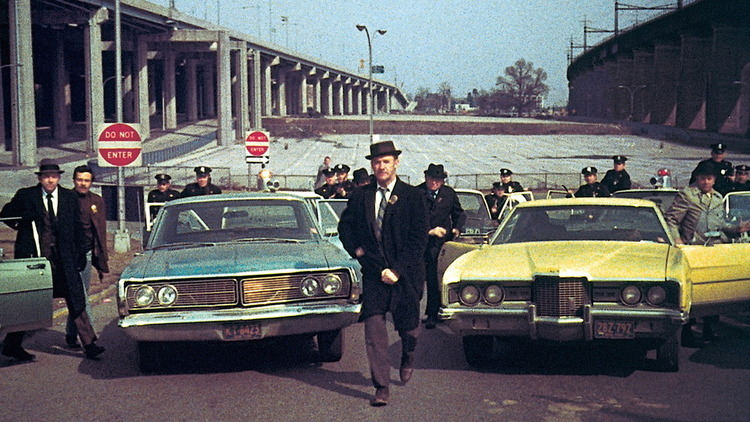 Before the late 1960s, Hollywood films were controlled by the Production Code, which
was a strict set of censorship guidelines that limited what could be shown on screen from 1934 to 1968. The code restricted content such as sex, nudity, crime, and violence, which forced filmmakers to follow strict moral codes and rules that often led to unrealistic and overly censored depictions of life. As society began to change in the 1960s these restrictions became outdated and filmmakers started to push back because there were many instances where films that were denied by the code were still released and became successful. This led to the creation of the MPAA ratings system in 1968. The rating system allowed more freedom and fewer restrictions of themes like sex, violence, and adult content. Films like Midnight Cowboy (John Schlesinger, 1969) and The French Connection (William Friedkin, 1971) clearly show this shift in Hollywood filmmaking. This paper argues that the creation of the MPAA ratings system in 1968 was a major turning point in the film industry by replacing the restrictive Production Code with a system that allowed more mature and