Shadows of Humanity: Exploring Identity and Ethics in Tech-Noir Cinema
Paper by Yutao Geng.
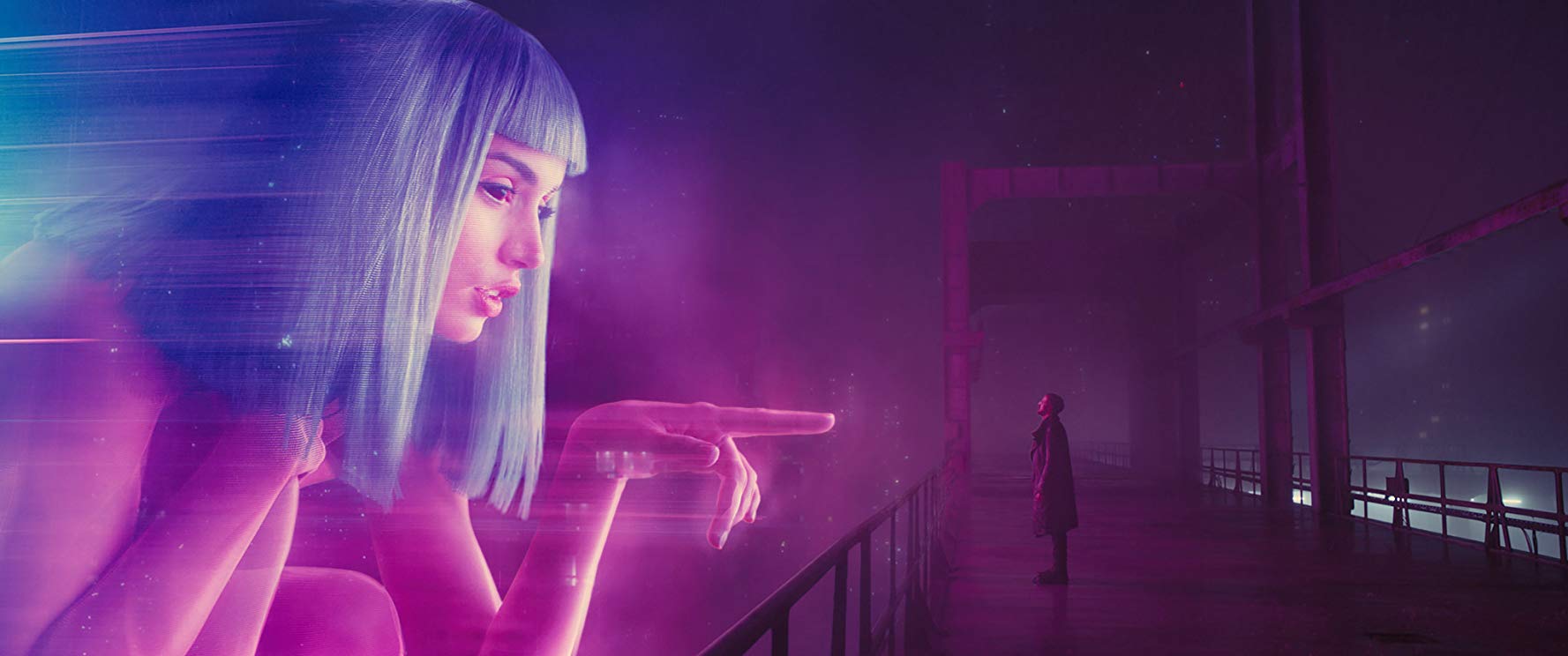 In the course of film history, the fusion of Neo-Noir and Science Fiction has gradually formed a unique genre, known as Tech-Noir. This genre explores complex themes such as human nature, identity, and moral ambiguity by combining the visual style and narrative features of classic film noir with futuristic and high-tech elements. In this paper, I will analyze three classic Tech-Noir films: Blade Runner (1982), Blade Runner 2049 (2017), and Ex Machina (2014). These three films not only inherit the core characteristics of film noir in terms of visual style, character creation, and narrative structure, but also conduct philosophical reflections on human identity and artificial intelligence through the background of science fiction. These films are not only innovations in vision and style, but also a profound interpretation of the dilemma of human nature and technological development in contemporary society. Through textual analysis and citation of academic materials, I will demonstrate how these films express doubts about the boundaries between human nature and artificial intelligence through genre fusion, and reflect contemporary society’s anxiety about technological progress and moral crisis.
In the tech-noir film, the visual style is not only the background of the narrative, but also the core means of conveying the film’s philosophical ideas. In Blade Runner (1982) and its sequel Blade Runner 2049 (2017), directors Ridley Scott and Denis
Villeneuve present a depressing and cold future world through low-key lighting, rain-soaked cityscapes and futuristic architecture. This visual style not only conveys the loneliness of human beings in a technological society, but also highlights the struggle of replicants for identity. As stated in the book Tech-Noir: Film – A Theory of the Development of Popular Genres, tech-noir films “create a futuristic and decadent urban atmosphere through the contrast of shadows and neon, making the confrontation
between humans and technology concrete” (Silver, 262). This visual style is particularly prominent in Blade Runner 2049, where the shots of K walking in the rain and through dark ruins not only show the indifference of society, but also symbolize his confusion about his own identity.
In contrast, Ex Machina (2014) adopts a completely different visual style. Director
Alex Garland creates an image of the opposition between technology and nature
through minimalist high-tech laboratories and cold-toned natural landscapes. This visual
contrast reflects the tension between restraint and freedom of the AI character Ava. As
mentioned in the book “Postfeminist Whiteness”, “contemporary technological spaces
often show indifference and control, and individuals in these spaces try to seek
self-identity by manipulating others” (Marston, 115). In the film, the scene where Ava
and Caleb look at each other on both sides of the glass partition shows the
insurmountable gap between humans and AI through cold colors and minimalist
composition. This style is not only a symbol of science fiction, but also a profound
metaphor for individual isolation and technological control.
In the comparison of visual styles, all three films use classic elements of film noir,
such as low-key lighting and cold colors, but in the context of science fiction, these
elements are not only to create atmosphere, but also a philosophical exploration of the
individual dilemma in a technological society. Whether it is the future ruins in “Blade
Runner”, the cold city in “Blade Runner 2049”, or the technological chamber in “Ex
Machina”, these visual symbols convey the theme of identity loss and moral ambiguity
in a post-human society.
In the new technological noir films, identity and humanity are always the core
themes, which are deeply explored through the roles of replicants and artificial
intelligence. “Blade Runner” (1982) and its sequel “Blade Runner 2049” (2017) raise a
key question through the concept of replicants: What is the boundary between humans
and non-humans? In these two films, replicants not only have an appearance and
emotions that are almost the same as humans, but even show deeper emotional
experiences than humans. As stated in Tech-Noir: Film – A Theory of the Development
of Popular Genres, “Tech-Noir films question the nature of humanity and life through the
image of replicants, especially when replicants show emotions, fears, and anxiety about
death. Are they still machines or have they become human beings?” (Silver, 274). In
Blade Runner, Roy Batty’s “Tears in the Rain” monologue has become a classic. This
passage not only expresses his pain about the brevity of life, but also reveals the
replicant’s desire for self-existence.
In Blade Runner 2049, this identity anxiety is more complicated. The replicant K
(played by Ryan Gosling) in the film is programmed to obey humans, but he gradually
develops confusion about his self-identity during his investigation. He thinks he may be
the offspring of humans and replicants, but eventually finds that he is just one of many
replicants. This process of identity disillusionment reveals the film’s reflection on the
nature of human identity: if replicants have emotions and free will, then how are they
different from humans? As pointed out in Tech-Noir, “Tech-Noir challenges
anthropocentrism and reveals the falsehood of human identity and free will through the
perspective of replicants” (Silver, 276).
Compared with the uncertainty of replicant identity in the Blade Runner series, Ex
Machina (2014) further explores the moral boundary between artificial intelligence (AI)
and humans. In the film, Ava (played by Alicia Vikander) is an advanced artificial
intelligence created by Nathan (played by Oscar Isaac). She is not only able to
communicate fluently with Caleb (played by Domhnall Gleeson), but also able to display
complex emotions and motivations. However, as described in the book “Postfeminist
Whiteness”, Ava’s existence also embodies “the control and resistance of female
identity in modern technological society” (Marston, 120). Ava eventually gains freedom
by manipulating Caleb. This reversal reveals that she is not only an object of
manipulation, but also an individual who actively seeks self-liberation. Her escape
symbolizes the rebellion of artificial intelligence against human control, and also
demonstrates the “subversion of power relations between humans and non-humans” in
the technological neo-noir film (Marston, 121).
Through the image of replicants and artificial intelligence, the three films reveal
the issues of identity and humanity, and all involve the themes of moral ambiguity and
free will. In Blade Runner, Deckard (played by Harrison Ford), as a human who hunts
replicants, gradually develops sympathy for the replicants and develops feelings with
the replicant Rachel, which reflects the gradual disappearance of the boundary between
humans and replicants. In Blade Runner 2049, K’s identity crisis symbolizes the
replicants’ confusion about their identity with themselves and the human world, while in
Ex Machina, Ava not only shows self-awareness, but also achieves self-liberation
through manipulation and resistance.
The core of the theme of identity and humanity lies in the fact that these films not
only explore the biological boundary issues brought about by technology, but also reflect
on the fluidity and fragility of human identity in modern society. As pointed out in the
book “Tech-Noir”, “Tech-Noir reveals the socially constructed nature of human identity
through replicants and artificial intelligence, and challenges anthropocentrism through
moral dilemmas” (Silver, 279). This uncertainty of identity not only reflects the dilemma
of the characters in the film, but also reflects the confusion of humans about self and
others in modern society.
Moral ambiguity and ethical dilemmas are also core themes in Tech-Noir. These
films reveal ethical challenges in technological society by showing the complex
relationship between humans and non-humans. Blade Runner (1982) and Blade Runner
2049 (2017) are particularly prominent in this theme. In the film, replicants are not
simply machines, but beings with emotions and autonomous consciousness. However,
as pointed out in “Tech-Noir: Film – A Theory of the Development of Popular Genres”,
“Tech-Noir questions the legitimacy of human moral superiority by deliberately blurring
the moral boundaries between humans and non-humans” (Silver, 281). In Blade
Runner, Deckard was initially tasked with hunting replicants, but as he bonded with the
replicant Rachel, he gradually realized that these replicants also had life value. Roy
Batty’s “Tears in the Rain” monologue is not only a lament for the brevity of life, but also
a declaration of the dignity of life: “I’ve seen things that you humans can’t imagine.” This
classic monologue expresses the replicants’ desire for survival and recognition,
reflecting the film’s interrogation of human morality.
In Blade Runner 2049, this moral ambiguity is further deepened. K (played by
Ryan Gosling), as a replicant hunter, gradually doubts his identity and tries to find his
“humanity”. He was initially told that he was just a replicant, but during the investigation,
he thought he might be the offspring of humans and replicants. However, in the end he
found that he was just one of millions of replicants, and this identity disillusionment
revealed a moral dilemma: if replicants can love, fear, and desire freedom, then what is
the difference between them and humans? This is not only an identity issue, but also a
moral issue. As stated in Tech-Noir, “Tech-Noir reveals the fear of life and self in a
technological society through the ambiguity of identity and moral dilemmas” (Silver,
284).
In Ex Machina (2014), this moral ambiguity is presented in a more direct way.
The artificial intelligence Ava (played by Alicia Vikander) in the film can not only simulate
emotions, but also manipulate humans. She gains trust through communication with
Caleb, and eventually puts Caleb and her creator Nathan (played by Oscar Isaac) to
death. Ava’s escape is both a victory in her pursuit of freedom and a moral failure faced
by humans in creating intelligent life. As mentioned in the book “Postfeminist
Whiteness”, “Ava’s resistance reveals the inequality of gender and power in a
technological society. Women are regarded as objects to be controlled, and her escape
symbolizes resistance to this oppression” (Marston, 123). Ava is not only a manipulated
AI, but also a life form with self-awareness and strategies. Her escape and rebellion
reflect the film’s profound reflection on the ethical issues brought about by human
creation of life: If artificial intelligence has self-awareness, what right do humans have to
control or destroy them?
Through the choices and behaviors of the characters, these three films reveal the
core of moral ambiguity and ethical dilemmas in technological society. As a hunter,
Deckard gradually realizes that the replicants he hunts actually have the same meaning
of life as he does, while K experiences the disillusionment of identity and ultimately finds
his own value of existence in self-sacrifice. In contrast, Ava defeats her controller
through intelligence and strategy, symbolizing the resistance of technological life to
human control. As stated in “Tech-Noir”, “Tech-Noir reveals the complex and tense
relationship between humans and non-humans in technological society through moral
ambiguity and ethical dilemmas” (Silver, 285).
More importantly, the ethical dilemmas of these films are not limited to the plot
itself, but reflect the general concerns of modern society about the relationship between
technology and humanity. With the rapid development of artificial intelligence and
genetic engineering, humans not only face the problem of how to define “humanity”, but
also face the moral challenge of how to coexist with intelligent life. This fear and
uncertainty is exactly the core revealed by the new technology noir film.
Tech-noir films not only present the grim face of future society through visual
style and narrative structure, but also explore the existential dilemma of human beings
in the technological age from a philosophical perspective. The moral ambiguity and
identity crisis presented in these films actually reflect the collective anxiety of modern
society about technological progress and the nature of human nature. “Blade Runner”
(1982) and “Blade Runner 2049” (2017) raise a core question through the existence of
replicants: if a non-human life form can experience emotions, have memories and
desire to survive, should it also have the same rights as humans? As pointed out in
“Tech-Noir: Film – A Theory of the Development of Popular Genres”, “Tech-noir films are
not only an innovation in visual style, but also a philosophical expression that explores
the increasingly blurred boundaries between humans and technology and the ethical
dilemmas brought about by this boundary” (Silver, 288). In these two films, replicants
are not only a product of technology, but also a symbol of human nature and
self-identity.
In Blade Runner, Roy Batty’s (Rutger Hauer) “tears in the rain” monologue is not
only a classic scene in the movie, but also a philosophical reflection on the value of
human and non-human life. Roy laments that his memories and experiences will
disappear with his death, just as “tears in the rain” are silent. This fear of the brevity of
life and the disappearance of memory is not only the dilemma of replicants, but also the
existential anxiety faced by all life. As stated in Tech-Noir, “Tech-Noir reveals human
beings’ fear of death, oblivion and the disappearance of meaning through the image of
replicants” (Silver, 290). This philosophical dilemma is continued in Blade Runner 2049
through the character of K (Ryan Gosling). He not only faces his own identity crisis, but
also has to find himself between fake memories and real experiences. In the end, he
finds his own value through self-sacrifice. This exploration of self-sacrifice and human
dignity makes the film transcend ordinary science fiction adventures and become a
classic of philosophical reflection.
In contrast, Ex Machina (2014) explores the ethical challenges posed by
technology to humans more directly. Ava (played by Alicia Vikander) in the film is not
only an advanced artificial intelligence, but also an individual who is aware that she is
imprisoned and controlled. She eventually escapes her “cage” by manipulating Caleb
and Nathan, a reversal that reveals the nature of power and control in a technological
society. As described in the book “Postfeminist Whiteness”, Ava’s resistance symbolizes
“the controlled state of women in a technological society, and her escape represents a
resistance to this oppression” (Marston, 123). Philosophically, Ava’s existence questions
the morality of human creation of intelligent life: if artificial intelligence has
self-awareness and autonomous decision-making capabilities, then what right do
humans have to control them? Ava’s escape is not only her pursuit of freedom, but also
a warning to humans to control the power of science and technology.
The philosophical reflections of these films are not limited to the fate of the
characters, they are also warnings about the ethical challenges brought about by the
development of science and technology in contemporary society. With the rapid
development of artificial intelligence, genetic engineering and data surveillance
technology, humans are facing a series of unprecedented moral and social dilemmas.
As stated in “Tech-Noir”, “Tech-Noir explores the human dilemma in a technological
society through future scenes and non-human characters. This reflection is not only
philosophical but also social” (Silver, 292). The Blade Runner series questions the
human definition of life through the value of human life, while Ex Machina reveals the
nature of power and control in a technological society. These films reveal modern
society’s fear of technological progress through a fictional future world: technology is not
only a tool for human development, it may also become a monitor and controller of
humans.
In these films, visual style and narrative structure are not only a means of artistic
expression but also a carrier of philosophical and social reflection. Low-key lighting, cold
colors, and futuristic urban landscapes are not only aesthetic elements of black films but
also metaphors for loneliness and identity loss in modern society. The existence of
replicants and artificial intelligence further reveals human confusion about self and
others in the technological age. Through these visual and narrative elements, Tech-Noir
not only shows the cold face of the future world but also reveals modern society’s deep
concerns about technological control and the loss of humanity through the characters’
moral choices and identity struggles.
In this paper, I analyzed three classic techno-noir films: Blade Runner (1982),
Blade Runner 2049 (2017), and Ex Machina (2014). Through the analysis of visual
style, identity themes, and moral dilemmas, these films not only demonstrate the genre
fusion of techno-noir and film noir but also reflect the profound reflection of modern
society on technology, identity, and morality. They question the nature of human identity
and life through the characters of replicants and artificial intelligence; they show the
loneliness and moral ambiguity of modern society through low-key lighting and futuristic
urban landscapes; and through the choices and behaviors of the characters, they reveal
the ethical challenges faced by humans in a technological society.
These films are not just entertainment works, they are philosophical reflections
on the ethical dilemmas brought about by technological progress in modern society.
With the rapid development of artificial intelligence and big data surveillance, the
questions revealed by these films have become more urgent: How do humans define
life? How can we maintain our humanity in a society dominated by technology? Through
the analysis of these three films, we can see that techno-noir films are not only
innovations in visual and narrative styles but also profound reflections on the fate of
mankind and the future of technology.
Works cited
Doll, Susan, and Greg Faller. “Blade Runner and Genre: Film Noir and Science Fiction.”
Literature Film Quarterly, vol. 14, no. 2, 1986, pp. 89-100
Blade Runner and Genre: Film Noir and Science Fiction: EBSCOhost
Auger, Emily E. Tech-Noir Film: A Theory of the Development of Popular Genres.
Intellect, Limited, 2011. ProQuest Ebook Central, Santa Barbara City College, 2025
Marston, Kendra. Postfeminist Whiteness: Problematising Melancholic Burden in
Contemporary Hollywood. Edinburgh University Press, 2018. JSTOR, Santa Barbara
City College, 2025
About this entry
You’re currently reading “Shadows of Humanity: Exploring Identity and Ethics in Tech-Noir Cinema,” an entry on Student Film Reviews
- Published:
- 07.16.25 / 11am
- Category:
- Academic Papers, Films
38 Comments
Jump to comment form | comments rss [?]