Laundry (Uhlanjululo), Dir. Zamo Mkhwanazi, 2025: Switzerland | South Africa
Reviewed by Walt Gu at SBIFF.
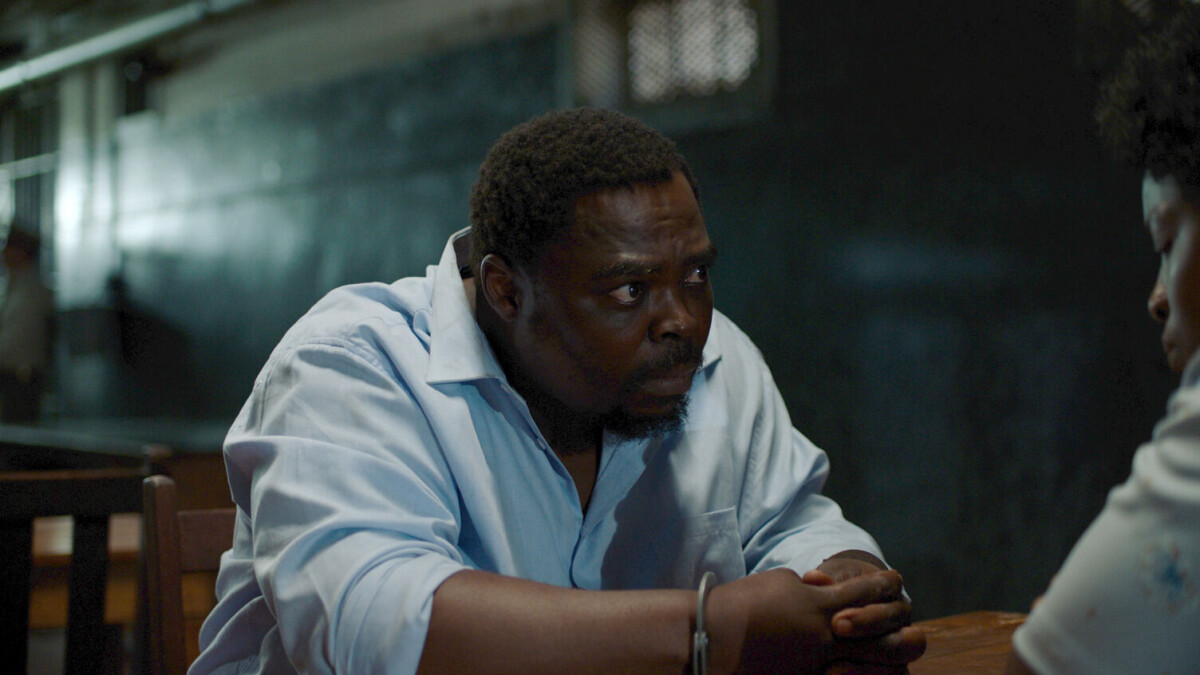
Some films ask one simple question: is this entertaining? Laundry (Uhlanjululo) asks a harder one: what happens to a family’s dreams when a system is built to crush them? Zamo Mkhwanazi’s debut feature is serious quite and heavy. For me, it’s also frustrating. I respect what it wants to say about apartheid-era South Africa, but the film’s rigid conflict, unclear character setup and very still camera style made it hard for me to feel engaged.
I watched Laundry (Uhlanjululo) in a big festival-theater setting, which matters, because this was a closing-night type of screening. In Santa Barbara, the U.S. premiere was programmed as the 2026 SBIFF Closing Night film at the Arlington Theatre. and it follows a young man pulled between music and his family’s laundry business. 106 minutes long, with a cast that includes Tracy September and Ntobeko Sishi, cinematography by Gabriel Lobos, and editing by Christine Hoffet.
The first part of the film establishes the family laundry as both a workplace and a symbol: it is how the family survives, but it is also a trap.Khuthala (the young man at the center) hates the idea of inheriting the laundry, yet the apartheid government is tightening rules and pressure on Black business ownership, especially in white areas. Arly scenes build a clear dream vs duty set upKhuthala wants music and freedom, while the family needs stability and protection.
The singer role appears early and is treated like someone who is already close to the family, but the film does not clear explain why。Alongside this the film reveals the kid who can play many instrument. The talent is shown, but the film does not spend much time show why music matters to him inside (like his passion, his inner push). maybe it is meant to prepare us for later disappointment or giving up. But if the film wants the audience to feel the loss of a dream, it helps to first show the dream as something burning inside a person, not only something they are “good at.” The story presents music as an ‘idea’, but not always as lived feeling. In the background, racism is an exhausting moments that slow everything down—almost like the film wants you to sit inside the discomfort
The main conflict is very firm: music dream vs family duty, with apartheid pressure pushing both sides. But for me, the conflict usually felt like it existed because a conflict ‘should’ be there, not because it naturally grew from the character’s choice. Instead of surprising turns the story often moves in a straight line: pressure increases, people suffer, and the mood gets darker.
Form matters here. Laundry uses an extremely still camera style. Many shots feel locked down, with limited reframing or movement. Sometimes a character simply stands and talks while the camera stays in the same position, and the only movement is the person’s mouth (or maybe just bad acting).That creates a feeling like we are watching a staged scene, or a witness who cannot step closer. To be fair, this could be a deliberate choice. A still camera can feel like a “trap,” which matches the characters’ trapped lives. showing the constant limitations and threats Black people were required to navigate in daily life. But the cost is that the film often lacks energy. When the camera never moves, it can flatten emotion, especially in scenes that already move slowly. Instead of building tension, the stillness sometimes made the scenes feel longer than they needed to be.
This film is not just sad—it is committed to sadness. The pace is slow and the tone holds heavy for long stretches. One extended racist encounter (it felt like it lasted around 15 minutes) becomes a major emotional block in the viewing experience. The film may be trying to force the audience to perceive the weight of apartheid as something that does not ‘pass quickly’ That might be a real arctic goal.
But in theater especially at the festival where people may bring friends and family, this kind of experience is a hard sell. That gap between audience expectation and the film’s emotional punishment can make the movie feel even more depressing. I remember seeing a young parent with a kid who was so excited to get his first Cinema experience, and here goes this film.
This film also raised a bigger question for me: what is independent film supposed to be? Can they be included in Cinema? “independent” mostly single made and supported (financing, freedom from studios, festival route), because of that freedom, sometimes artists choose discomfort over entertainment. Laundry is exactly that type of film: it wants you to feel the emotional and mental pressure of racist system, not enjoy the ride.
Still, I don’t think a film gets a free pass just because it is independent . A film can be sad and still craft clear characters, rich relationship and visual movement. For me Laundry is strongest in it’s political pressure, but weak in it’s character building and cinematic energy. This also rise something important: today the cost of making films is lower. So more people can make them. That increases variety (good), but it can also mean more films feel unpolished (bad). In Laundry even at 106 minutes, I frequently felt the film needed more time, or better use of time, to build supporting characters and make the world feel fuller. That doesn’t have to be a budget issue; it can also be a writing and structure issue.
I think Laundry (Uhlanjululo) is a film with a meaningful subject and a clear intention: show how apartheid crushes ordinary life,dreams, and family bonds. But as a viewing experience, it can feel emotionally one-note and formally stiff. Would I recommend it? Only to a specific audience: viewers who want slow, serious festival dramas about apartheid history and who are ready for a heavy, depressing tone. For people looking for a more dynamic film, stronger character arcs, more camera movement, and a wider ranger of emotion this will likely feel exhausting rather that engaging.
About this entry
You’re currently reading “Laundry (Uhlanjululo), Dir. Zamo Mkhwanazi, 2025: Switzerland | South Africa,” an entry on Student Film Reviews
- Published:
- 02.24.26 / 10am
- Category:
- Films, Santa Barbara Film Festival 2026
2 Comments
Jump to comment form | comments rss [?]